Psychosocially Supportive Design
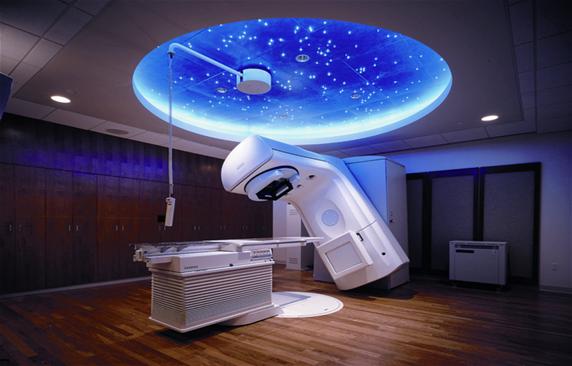 |
| A salutogenic approach to the physical environment includes design features that support our wellbeing (Pic credit: Anshen + Allen) |
While clinical practice focuses on treating illness, there’s also a raft of research to suggest that the quality of our everyday surroundings has a highly important role to play in sustaining wellness.
Architecture and design have been influenced by industrial societies for decades, and as a result, public buildings such as airports and hospitals have often been designed to function and look like factories. Clinical practice in hospitals focuses mainly on treating illness while often neglecting a patient’s psychological, social and spiritual needs.
Environmental qualities that could be considered as psychosocially supportive have not been developed properly. Psychosocially supportive design stimulates and engages people, both mentally and socially, and supports an individual’s sense of coherence.
The basic function of psychosocially supportive design is to start a mental process by attracting human attention, which may reduce anxiety and promote positive psychological emotions. Health processes could be strengthened and promoted by implementing design that is salutogenic – ie, that focuses on the factors that keep us well, rather than those that make us unwell.
The aim of psychosocially supportive design is to stimulate the mind in order to create pleasure, creativity, satisfaction and enjoyment. There is an important relationship between an individual’s sense of coherence and the characteristics of the physical environment.
In this literature review we have studied more than 300 articles as well as other literature that had relevant connection to the field of physical environment, health and behaviour, to shed light on psychosocially supportive design.
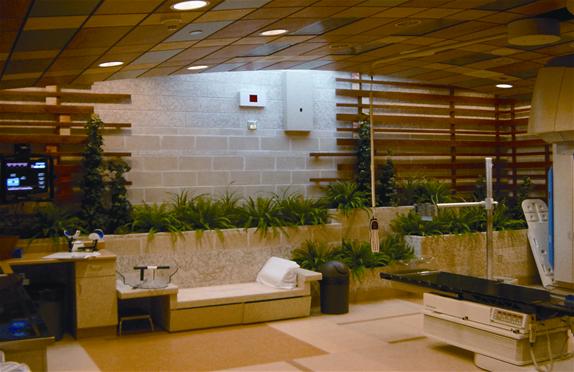 |
Wellness factors in the environment, such as daylight and nature, are evident in the radiology bunker at the Thunder Bay Regional Health Sciences Centre in Canada, designed by Farrow Partnership Architects
|
Theories and perspectives on health
Heath is difficult to define, since it is a subjectively experienced condition1. It is affected by norms and expectations and is also formed by previous experiences. There are a few different definitions of health. For example, Lawrence2 has defined health as a condition where resources are developed in the relationship between humans and their biological, chemical, physical and social environment.
Health can be divided into two different perspectives: the biomedical and the holistic. From a biomedical viewpoint, health is considered to be a condition without diseases3. In the western world, the biomedical perspective has been the leading perspective and has therefore formed the medical and healthcare field4. The holistic viewpoint emphasises multiple dimensions of health, including the physical, psychological, emotional, spiritual and social.
From a research perspective, health can be divided into a pathogenic and salutogenic starting point. Pathogenic research focuses on explaining why certain etiological factors cause disease and how they are developed in the physiological organism5. The primary aim of pathogenic research is often to find medical treatments (ibid.). Salutogenic research is based on identifying wellness factors that maintain and promote health, rather than investigating factors that cause disease6.
Together, the salutogenic and the pathogenic approach offer a deeper knowledge and understanding of health and disease (ibid.). To be able to answer the salutogenic question – what is causing and maintaining healthy people? – Antonovsky6 developed the concept of a sense of coherence (SOC). It maintains that a person with a high sense of coherence chooses the most appropriate coping strategy in a stressful situation. For example, the person
may decide to fight, flee or be quiet depending on what kind of stressor the individual is exposed to.
Research has shown that it is possible to measure a person’s sense of coherence and thereby predict an individual’s health7.
A strong sense of coherence predicts good health and a low sense of coherence predicts poor health (ibid.). In his study, Heiman8 showed that students with a high sense of coherence did not experience high levels of stress. The research also showed that coping strategies were significantly correlated with the individual’s sense of coherence (ibid.).
The concept of sense of coherence has three vital components (1) comprehensibility, (2) manageability and (3) meaningfulness6. A person with a strong sense of coherence scores high on all three components. According to Antonovsky6, the term comprehensibility implies that the individual perceives the surrounding environment and that which is happening in the world as coherent. If something unexpected is happening, such as an accident or personal failure, the person who understands why they are happening has a higher sense of coherence than one who cannot. A person with a low sense of coherence perceives himself as unlucky.
Manageability means that the individual experiences that she is disposed of all the required resources necessary to cope with a given challenge or demand. This means that the individual feels that she is infl uencing that which is happening around her and does not perceive herself as a victim of circumstance (ibid.). Antonovsky6 believes that a person’s sense of meaningfulness is connected to his or her perception that there are important and meaningful phenomena in life. Meaningfulness is the component that motivates a person’s sense of coherence.
Tim_Crocker_new1.jpg) |
Residents enjoying a sun-drenched courtyard at Colliers Gardens in Bristol, designed by Penoyre & Prasad. Designing places for restoration and relaxation help to support our health and wellbeing (Pic: Tim Crocker)
|
The physical environment
There is an interaction between humans and the physical environment. According to Dilani9,10, the physical environment is not only vital for good health, but can also be a critical stressor for the individual. Physical elements in an organisation can contribute to stress and are therefore essential factors for increasing comfort11. Despite that, the majority of humans in the western world spend most of their time in indoor environments; there is a lack of knowledge about how these environments affect a person’s health and wellbeing12. There is a general belief that humans are always adapting to the environment (ibid.). Often called the theory of adaptation, this belief indicates that people become less conscious of the environment the longer they reside or work in that given environment13. A general belief is that if one lets oneself be affected by the physical surroundings then it is a sign of weakness14.
In order to create supportive physical environments it is crucial to understand an individual’s fundamental needs14. It is also necessary for different professional disciplines to willingly cooperate in creating the best conditions for humans2,14. Before a zoo is built, it is common practice for architects, designers, biologists, landscape architects, animal psychologists and building specialists to collaborate in creating an environment that optimises the living conditions for the animals14. Factors such as materials, vegetation and lighting are taken into consideration; animals need enough space to eat, sleep and decide when to be social or seek solitude, and even their need for control and choice have been noticed.
The aim is to create an environment that will support the animal’s physical, psychological and social wellbeing. Ironically, humans do not seem to make the same demands when a workplace is going to be designed14. Heerwagen et al14, created a framework and guideline for a salutogenic design, which highlighted the following factors: (1) Social cohesion, both formal and informal meeting points; (2) personal control for regulating lighting, daylight, sound, temperature, and access to private rooms; (3) restoration and relaxation with quiet rooms, soft lighting, access to nature and a good view. Stokols15 has also contributed with design suggestions for health-promoting environments that stem from three different dimensions of health: physical, mental and social. Physical health can be promoted by an ergonomic design with non-toxic environments. Mental health can be promoted by personal control and predictability as well as aesthetic, symbolic and spiritual elements. Social health can be promoted by access to a social support network, and participation in the design process.
It is not a new idea to view the physical environment as a health-promoting factor. During the nineteenth century, Florence Nightingale developed a theory of healthcare that emphasised that physical elements are vital for the individuals’ health16. Examples of physical elements, such as noise, illumination and daylight were considered vital factors for a person’s mood (ibid.).
Levi17 founded the stress theory model, which was later developed by Kagan and Levi18. The model is based on a system that points to a deeper understanding between the physical environment and different human components19.
According to Dilani9, the model describes how the physical environment is the foundation on which societal organisation is built and, in the long run, promotes health or disease. The model is used within the field of architecture to integrate design elements with health and wellbeing (ibid.).
Emdad20 has recently developed a model called Instability of Pyramids of Stress (IPS), where architecture and art are measurable variables. Emdad20 presents a new framework that, in relation to health at the workplace, has taken neuroergonomics into consideration. For example, there is a risk that the employee will develop stress-related symptoms and disease if he or she experiences high demands from the surrounding environment but does not receive any reward. The employee will experience stress if the reward is too low or not adequate, or if he does not have any suitable effort strategies in relation to psychosocial factors, home and family factors or neuroergonomics. The mode integrates all of these factors and focuses on health, burnout, cardiovascular diseases and short-term memory (ibid.).
Social support and the physical environment
Social support is an important factor when the aim is to promote an individual’s health and wellbeing21, 22, 23, 24. The knowledge and consciousness of social support and its relation to health increased in the 1950s25.
At the same time, researchers established that the physical environment and how it influences people’s emotions, behaviours and motivation are important to take into consideration when the aim is to promote health and wellbeing (ibid.). It is therefore essential to identify factors in the physical environment and, through design and architecture, create meeting points that can promote spontaneous social interaction and social support25, 26.
For example, research has shown that a certain length and layout of student dormitories can increase the number of social activities and promote social interaction, create a higher sense of control and reduce a sense of crowding27.
Crowding
Crowding is closely linked to social support28 and is often defi ned as the number of persons in a certain area or how much space every individual has received in a certain area (ibid.). Altman29 describes crowding as a condition where a person’s private sphere is trespassed. If there is too much undesirable contact, an individual may experience a sense of crowding. On the other hand, if an individual experiences too little contact, there is a risk that he or she may feel lonely and isolated (ibid.). This balance between social interaction and desired loneliness can, according to Maxwell30, be regulated and achieved if one can control his or her own levels of social interaction.
Nature and its meaning for health
Most people have some kind of relationship to nature and there are many people who greatly value diverse natural environments. Also, there are many people who want to get away from everyday life during weekends and holidays, and regain their strength in relaxing and natural recreational areas. What is it that makes people feel at ease in nature?
Does the natural environment affect people in different ways? Is it possible to draw any general conclusions about nature’s influence on the human being? Kaplan and Kaplan31 have developed the Attentional Restorative Theory (ART), which identifies two attention systems – direct and indirect attention – and how they are related. Indirect attention does not demand any energy or effort from the person and it is activated when something exciting suddenly happens or when one does not have to focus on something in particular.
Direct attention is activated as soon as a person needs to concentrate and focus on a task and simultaneously block other disturbing stimuli. After an intense period of direct attention, a person is in need of restoration; otherwise she will easily become mentally exhausted. People who have been using their direct attention without resting often become impatient and irritated and it has been shown that a mentally exhausted person often commits so called “human errors” (ibid). A person who does not have the capacity to concentrate often becomes thoughtless, less cooperative and less competent31, 32, 33.Therefore, in order to work efficiently, it is vital to have a well-functioning attention system and find time for restoration.
These studies have been able to distinguish the following four needs when individuals are in need of restoration and recreation: (1) The need for being away from everyday life and its surrounding sounds, routines, crowding, etc; (2) The need for fascinating stimuli that effortlessly stimulate the individual, and diminish the risk of becoming bored; (3) The need for extent, which at the same time can create a feeling of being in a completely different world31, 32; (4) The need for compatibility while performing one’s tasks31, 32.
The restorative environment should be inviting, well-balanced with aesthetic beauty, and allow people to reflect33. Nature, with its colours, forms and scents, is unparalleled in encouraging people to forget about their everyday life. It is therefore very important that natural environments are accessible at the workplace (ibid.). The ART has been tested and confirmed by different researchers33, 34.
For example, one of the studies33 showed that three of the four components – being away, extent and compatibility – are seen as measurable indicators of how to create a restorative environment.
According to Van den Berg, Hartig and Staats35, several studies have confirmed that human beings perceive natural
environments as more restorative than urban environments. Therefore, when human beings are tired and mentally exhausted, nature is the appropriate place for restoration. Other studies have shown that viewing nature through a window has positive health outcomes36, 37, 38, 39.
Daylight, windows and lighting
There is a great deal of research on daylight’s positive effects on humans’ psychological wellbeing12. A lack of daylight can lead to both physiological and psychological difficulties40. Research has also shown that daylight in a classroom is necessary for the pupils to maintain a balanced hormone level41. It is also shown that a window can have positive health outcomes on patients42,43.
The window can contribute by allowing fresh air and daylight to enter as well as providing a view. It can also be the link to the outer world – thus satisfying a patient’s or prisoner’s need for viewing the season’s variations, etc. (ibid.). Another study showed that exposure to direct sunlight via windows at the workplace increased workers’ wellbeing and had a positive impact on their attitudes and job satisfaction38.
Research has shown that illumination can have an impact on factors in daily life, such as sleep and work performance. For example, Lack and Wright44 showed that exposure to lighting at certain times during a 24-hour period can prolong sleep and improve the quality of sleep. Energy consumption and costs can decrease if the individual has the ability to control the illumination levels (ibid.), which also has positive affects on environmental resources45. Research also showed that an individual’s general satisfaction was higher when they had the ability to control the lighting levels themselves (ibid.). Ku¨ller46 concludes that lighting will become more important in the future, especially since it is becoming more common with buildings without windows that have no access to daylight.
Colour, space and landmarks
Colours can possibly affect the brain’s activity and create a sense of wellbeing and originality within architecture47. Colours can also have symbolic value and in that way contribute to the building’s identity and/or cultural meaning. Colours should be of high interest to city planners, mainly because of the aesthetic values, but also because of their symbolic values, which can reflect an organisation’s philosophy (ibid.).
The so-called warm colours (red, yellow and orange) are considered to have an activating affect, while the so-called cold colours (blue, purple and green) are considered to have a calming effect48.
Ku¨ller48 refers to a well-known colour study from 1958 in which researchers conducted different physiological tests to investigate the brain’s activity during exposure to different colours. When the participants were exposed to the colour red, their brain activity increased more than when exposed to the colour blue. The results showed differences in blood pressure, breathing, and blinking frequencies (ibid.).
Goldstein49 calls attention to an important viewpoint, which asserts that the individual’s former experiences can affect their emotions, actions and behaviour, dependent on what colour they are exposed to. There are also geographical, cultural and historical factors that can affect a person’s colour choice; some colours have religious meaning (ibid).
Berlyne50 and Janssen47 highlight that the colour should suit the contextual environment and it is important that colour activation be well balanced to fit the environment. In his book “The Language of Space”43, Lawson considers that space is both that which separates people from one another and that which bonds them together. It is the architecture, with its buildings, rooms, surfaces, dormitories and facilities, that create the prerequisites for individuals to cooperate, work in privacy, create relationships and fulfill their general social, psychological and physiological needs (ibid.).
According to Vischer51, the organisation’s image and identity are viewed and expressed through the architectural facilities. Vischer51 also maintains that the employee’s working identity and role are associated with the working environment and therefore the architectural design partly forms the employee’s identity.
Furthermore, the physical work environment’s design has a pronounced effect on worker performance and in the long run affects the organisation’s productivity. Physical, psychological and functional comfort can have positive outcomes on employee performance and morale (ibid.).
Taylor52 uses the concept of therapeutic design. He maintains that a well-designed physical environment within the hospital can positively affect the rehabilitation process. An inviting lobby or reception area may decrease anxiety (ibid.)
Edvardsson’s research53 showed that healthcare environments that are welcoming, inviting, enriched by beautiful objects and that create space for social meetings, affect patients by making them more receptive to rehabilitation. The research also showed that it was easier for patients, visitors, relatives and personnel to relax, follow their own rhythm and feel secure and safe in these kinds of settings.
Other factors for wellbeing are, according to Dilani54,55, landmarks in buildings. These landmarks are closely related to the perception of stress54 seeing as these landmarks can serve as reference points in the buildings for easy orientation and creating our cognitive maps of the environment55.These landmarks could be objects such as sculptures, paintings, aquarium or different colours in different rooms.
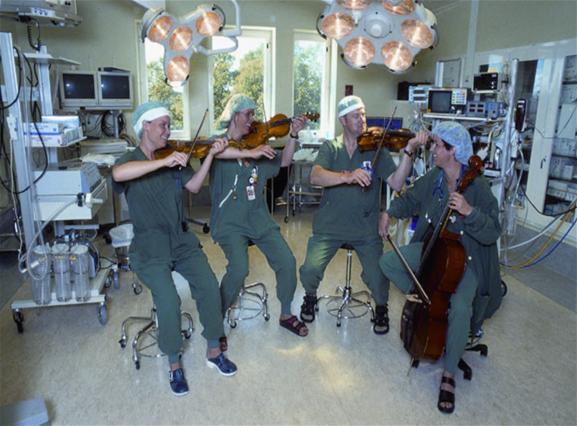 |
| Music can decrease stress and anxiety |
Sound, music and health
The experience of sound is highly individual56 and Kryter57 describes that there are three variables that affect an individual’s sound experience; volume, predictability and possibilities for control.
Studies have shown that noise can lead to physiological, psychological and social health consequences. Noise is a regular factor in the physical environment, which can contribute to stressful experiences40 and irritation, which can lead to stress and cause stress related diseases58.
Leather, Beale and Sullivan59 have shown that noise can have a significant relation to working demands, where workers’ perception of work stress decreases with lower noise levels. Leather et al59 explain that workers in a less noisy environment possibly need fewer coping strategies for adapting to the physical environment and can therefore focus their energy and coping strategies on other stressful events. In that way, the physical auditory environment can be a vital factor in helping individuals cope with other stressors (ibid.).
Lang, Fouriaud and Jacquinet-Salord60 and Evans, Bullinger and Hygge61 proved that noise can increase an individual’s blood pressure, and other researchers62 showed that noise can increase cortisol levels. Research has also shown that noise can negatively infl uence the healing process63. Noise can contribute to mental exhaustion, which in turn can affect the amount of medication that a patient takes64, 65.
Investigations have also established the connections between noise, irritation and lack of concentration58. Finally, other studies indicate that the perception of life quality decreases in a noisy environment61 and that high noise levels can also inhibit social interaction66.
There are sounds that promote health and Lai, Chen, Chang, Hseih, Huang, Chang and Peng67 maintain that music can promote health, since it may contribute to a decreased activation in the sympathetic nervous system. Music may also lead to lower heart and breathing frequencies, and increase body temperature (ibid.).
Lee, Chung, Chan and Chan68 conclude that music can be an effi cient method for decreasing negative physiological affects when people are suffering form anxiety and stress. Music, or music in combination with therapeutic treatment, can improve a patient’s rehabilitation process69. McCaffrey and Good70 showed that patients who listened to music after surgery experienced less pain, anxiety and fear than those who did not. The patients claimed that, instead of being frustrated over pain and fear, music helped them to focus on healing, (ibid.).
In her research, Spychiger71 showed that music lessons in school had emotional, social and cognitive effects and that the pupils with more music education cooperated better than the control groups. The atmosphere was better and motivation for learning was stronger (ibid.).
Art, health and wellbeing
According to art historians, humans live nowadays in a more aesthetic world, where art, fashion and design offer countless aesthetic experiences72. When a person observes and appreciates different visual scenes, such as a piece of art, complex cognitive and emotional processes arise73.
In order to understand the meaning of a painting one often has to understand its different parts before one can understand the whole. During the observation of a painting and in the process of understanding it, a person can, for example, experience joy, participation, discomfort or interest. These emotional and cognitive responses are called aesthetic experiences (ibid.) and, according to Leder et al72, often lead to positive, satisfying and rewarding experiences for the viewer.
According to Kreitler and Kreitler74, art psychology is an empirical, scientific discipline that focuses on a person’s internal and external behaviour and how they are related to art. They believe that psychological models regarding art perception should be based on the homeostatic behaviour model, which suggests that there is an optimal physical condition in which humans strive to reach the balance between tensions and relief.
This condition of tension and relief can explain some parts of the individual’s relationship to art, and that the art experience can help the person to restore the homeostatic balance (ibid.).
|
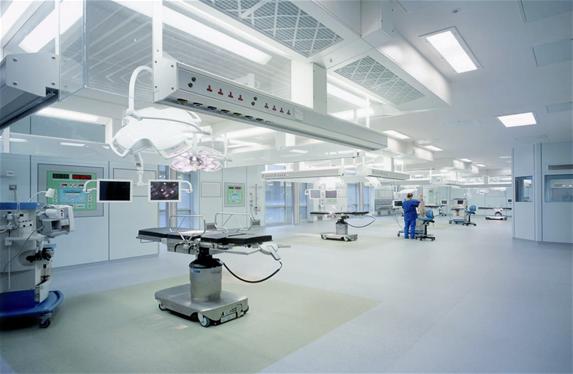
Evaluations suggest that barn theatres, such as this one at Broadgreen Hospital, Liverpool, designed by Nightingale Associates, enhance surgical performance
|
The physical environment and productivity
When a company’s management wants to increase productivity, they often focus on employee competence and personal motivation rather than on the physical environment and design14. In his study, Herzberg75 observed the employee’s motivation and the relationship between workers’ behaviour and the physical environment. When the physical environment is perceived as disturbing, it can negatively affect the employee’s motivation and thereby productivity.
Herzberg emphasised that it is necessary to have access to a physically supportive environment, which can contribute to the employee’s motivation (ibid.). Maslow’s76 theory of motivation is one of the most well-known theories related to human need and motivation: it was developed to analyse and explain the social environment, but it can be applicable to the physical environment14.
For instance, the need for safety can be achieved through designed environments that allow people to have a good visual overview (ibid.). If humans are not stimulated by their surroundings, they can easily lose interest and this can result in reduced performance43. On the other hand, too much stimulation can lead to stress since a person may not have the capability to deal with the stimulation (ibid.).
Increased knowledge and consciousness about the relationship between improved health and increased profitability would affect how designers, architects and managers design, build and maintain buildings77. For instance, improved indoor climate could improve employees’ health, decreases the number of sick days, reduces healthcare needs and increases productivity, which in turn strengthens the humane capital and leads to higher company profitability.
Ergonomic improvement for the employees has also been proven to increase a company’s profitability (ibid.). For instance, IBM invested $186,000 in ergonomic education and implemented extended ergonomic changes, whereby they changed the design of the workplace and different working tools78. The improvements contributed to better working positions, improved illumination, lower noise levels and better support with heavy work routines.
The project decreased sick days by 19%, which generated a profit of $68,000 per year. In addition, the changes contributed to higher productivity and improved quality, which lead to a profit of $7,400,000 per year. In other words, investments and changes within the physical environment lead to profits through an increase in health conditions and productivity (ibid.).
Research in the field of health is still primarily focused on risk and prevention of diseases – a pathogenic approach – rather than applying the salutogenic perspective that focuses on factors that promote and strengthen individual health and wellbeing.
A new research field, which focuses on the relationship between different factors in the physical environment and positive health promoting factors, should be developed.
Knowledge of which environment factors contribute to health and wellbeing can thereafter be guidelines in making subsequent political decisions. It is also important to have an interdisciplinary perspective where different individuals with different backgrounds and knowledge work together in this field – people like psychologists, architects,
landscape architects, doctors, behavioural scientists, health promoters and so on.
The salutogenic approach provides a basic theoretical framework for psychosocially supportive design, which can promote health and wellbeing.
Psychosocially supportive design should incorporate and consider factors such as access to symbolic and spiritual elements; access to art; good lighting; attractive space for social interactions; private spaces; and an interior environment that provides positive experiences.
Other factors include visual and physical access to nature, and personal control over, for example, lighting, daylight, sound, indoor temperature and contact with other people.
These factors can stimulate, engage and improve a person’s sense of coherence, thereby enhancing his or her coping strategies and health. Psychosocially supportive design is not only the task for one person, but requires that the entire organisation understands the meaning of salutary management.
A new health paradigm
In summary, one of our intentions with this article was to shed light on factors in the physical environment that could promote health, wellbeing and increase a organisation’s productivity and profitability.
There is a need to systematically conduct more empirical studies that investigate and verify the salutogenic model and identify a range of wellness factors in psychosocially supportive design. The study encourages decision-makers to implement psychosocially supportive design that in turn promotes health and wellbeing.
It is time to step into the new millennium where the salutogenic approach and psychosocially supportive design lead the way for a new paradigm. Finally, it is necessary to understand Winston Churchill’s quotation – “We shape our buildings, then they shape us” – which states that the buildings we design have a signifi cant impact on human behaviour.
Author

Alan Dilani is the founder and general director of the International Academy for Design and Health.
Bibliography
Ali, M.R. (1972). Patterns of EEG recovery under photic stimulations by light of different colours. Electroencephalography and Clinical Neurophysiology, 33, 332-335.
Altman, I. (1975). The environment and social behaviour: privacy, personal space, territory, crowding. Monterey, California: Brooks/Cole Publishing Company.
Andersen, P., Göransson, A., Petersson, C. (2004). Hälsa och hälsofrämjande arbete – en studie av vårdpersonalen och landstingspolitikers uppfattningar. [Health and health promoting work – a study of care employees and political decision makers´ opinions]. FoU-rapport 2 004:2. Landstinget Kronoberg.
Antonovsky, A. (1991). Hälsans mysterium [The Mystery of Health]. Stockholm: Natur och Kultur.
Antonovsky, A. (1979). Health, stress and coping. San Francisco: Jossey-Bass.
Baum, A., & Davis, G.E. (1980). Reducing the stress of high-density living: An architectural intervention. Journal of Personality and Social Psychology, 38 (3) 471-481.
Berlyne, D.E. (1971). Aesthetics and psychobiology. New York: Appleton-Century-Crofts.
Brandenberger G, Follenius M, Wittersheim G, Salame P. (1980). Plasma catecholamines and pituitary adrenal hormones related to mental task demand under quiet and noise conditions. Biological Psychology, 10, 239–252.
Carnevale, D.G. (1992). Physical settings of work: A theory of the effects of environmental form. Puplic Productivity & Management Review, Vol. 15, No. 4, pp. 423-436.
Connors, D.A. (1983). The school environment: A link to understanding stress. Theory into Practice, 22, (1), 5-20.
Cooper, C. L. (1983). Identifying stressors at work: Recent research and developments. Journal of Psychosomatic Research, 27 (5) 369-379.
Costa, D.D., Clarke, A.E., Dobkin, P.L., Senecal, J-L., Fortin, P.R., Danoff, D.S., & Esdaile, J.M. (1999). The relationship between health status, social support and satisfaction with medical care among patients with systemic lupus erythematosus. International Journal of Quality in Health Care, 2 (3) 201-207.
Dijk, F.J.H Van, Souman, A.M., & De Vires, F.F. (1987). Non-auditory effects of noise in industry. VI. A final field study in industry. International Archives of Occupational and Environmental Health, 59, 133-145.
Dilani, A. (2006). A new paradigm of design and health in hospital planning. World Hospitals and Health Services, 41 (4) 17-21.
Dilani, A. (2001). Psychosocially supportive design – Scandinavian healthcare design. I: Dilani, A (Ed). Design and health – The Therapeutic Benefits of Design (pp. 31-38). Stockholm: AB Svensk Byggtjänst.
Edvardsson, D. J., Sandman, P-O., & Rasmussen, B. H. (2005). Sensing an atmosphere of ease: a tentative theory of supportive care settings. Nordic College of Caring Sciences; 19, 344-353.
Emdad, R. (2005). Comparison of the “Instability of Pyramids of Stress (IPS)”, Occupational Health and Work Environment Stressors in Dentists and Cleaners. CEJOEM, 1 (1) 33–71.
Evans, G. W. (2003). The build environment and mental health. Journal of Urban Health: Bulletin of the New York Academy of Medicine, 80 (4) 536-555.
Evans, G.W., Bullinger, M., & Hygge, S. (1998). Chronic noise exposure and physiological response: A prospective study of children living under environmental stress. Psychological Science, 9 (1) 75-77.
Ewles, L & Simnett, I. (1994). Hälsoarbete [Health work]. Lund: Studentlitteratur.
Fife, D. & Rappaport, E. (1976). Noise and hospital stay. American Journal of Public Health, 66 (7) 680-681.
Fisk, W.J. (2000). Health and productivity gains from better indoor environments and their implications for the U.S. Department of Energy. Annual Review of Energy and the Environment, 25, 537-566.
Fleming, R., Baum, A., & Singer, J.E. (1985). Social support and the physical environment. I: Cohen, S. & Syme, S.L. (Ed.). Social Support and Health (s. 327-345). Orlando, Florida: Academic press.
Frumkin, H. (2001). Beyond toxicity. Human health and the natural environment. American Journal of Preventive Medicine, 21 (3) 234-240.
Geas, G.G. (1994). Prison Crowding Research Re-examined. Federal Bureau of Prisons.
Goldstein, K. (1942). Some experimental observations concerning the influence of colors on the function of the organism. Occupational Therapy and Rehabilitation, 21, 147-151.
Heerwagen, J.H., Haubach, J.G., Montgomery, J., & Weimer, W.C. (1995). Environmental design, work, and well being: managing occupational stress through changes in workplace environment. Official Journal of the American Association of Occupational Health Nurses, 43 (9) 458-468.
Heiman, T. (2004). Examination of the salutogenic model, support resources, coping style, and stressors among Israeli University students. The Journal of Psychology, 138 (6) 505-520.
Helander, M., & Burri, G. (1995). Cost effectiveness of ergonomics and quality improvements in electronics manufacturing. International Journal of Industrial Ergonomics, 15, 137-151.
Herzberg, F. (1966). Work and the Nature of Man. New York: Crowell.
Herzog, T. R., Maguire, C. P., and Nebel, M. B (2003). Assessing the Restorative Components of Environments. Journal of Environmental Psychology, 23, 159-170.
Jacoby, J.E., & Kozie-Peak, B. (1997). The benefits of social support for mentally ill offenders: prison-to-community transitions. . Behavioral Sciences and the Law, 15 (4) 483-501.
Janssens, J. (2001). Facade colors, not just a matter of personal taste: A psychological account preferences for exterior building colors. Nordic Journal of Architectural Research, 14, 17-21.
Janssen, J., & Laike, T. (2006) Rum för återanpassning- den fysiska miljöns betydelse för ungdomsvården – en miljöpsykologisk översikt [Rooms for readapting – a physical environment´s meaning for youth care – an environmental psychological review]. Statens institutionsstyrelse (SIS). Rapport 2/06, Edita Stockholm 2006.
Kagan, A. R., & Levi, L. (1975). Health and environment – psychosocial stimuli: a review. I: Levi, L. (Ed.). Society, stress and disease: childhood and adolescence; Ed. 2 (pp. 241-268). London, New York & Toronto: Oxford University Press.
Kalimo, R. (2005). Reversed causality: a need to revisit systems modelling of work-stress-health relationships. Scandinavian Journal of Work, Environment & Health, 31 (1)1-2.
Kaplan, R., & Kaplan, S. (1989). The Experience of Nature: A psychological perspective. New York: Cambridge University Press.
Kaplan, S. (1995). The Restorative Benefits of Nature: Toward an Integrative Framework. Journal of Environmental Psychology, 15, 169-182.
Keith, M. (2001). Making Meaning Brings Pleasure: The Influence of Titles on Aesthetic Experiences. Emotion 1(3) 320–329.
Kreitler, H., & Kreitler, S. (1972). Psychology of the Arts. Durham: Duke University Press.
Kryter, K.D. (1994). The handbook of learning and effects of noise. San Diego: Academic Press.
Küller, R. (1995). Färgens inverkan på människan [The color’s affect on humans]. In: Hård, A., Küller, R., Sivik, L., Svedmyr, Å (E.d.). Upplevelse av färg och färgsatt miljö [Experience of colour and painted environments] (pp. 13-30) Stockholm: Byggnadsforskning.
Küller, R. (2002). The influence of light on circa rhythms in humans. Journal of Physiological Anthropology, 21(2) 87-91.
Küller, R., & Lindsten, C. (1992). Health and Behaviour of Children in Classrooms with and without Windows. Journal of Environmental Psychology, 12, 305-317.
Lack, L., & Wright, H. (1993). The effect of evening bright light in delaying the circadian rhythms and lengthening the sleep of early morning awakening insomniacs. Sleep, 16, 436-443.
Lai, H-L., Chen, C-J., Peng, T.C., Chang, F-M., Hseih, Huang, M-L., & Cang, S-C. (2006). Randomized controlled trial of music during kangaroo care on maternal state anxiety and preterm infants´ response. International Journal of Nursing Studies, 43, 139-146.
Lang, T., Fouriaud, C., & Jacquinet-Salord, M-C. (1992). Length of occupational noise exposure and blood pressure. International Archives of Occupational and Environmental Health, 63, 369-372.
Lawrence, R.J. (2002). Healthy Residential Environments. In: T. Bechtel, R.B., & Churchman, A. (Ed.). Handbook of Environmental Psychology (pp. 394-412). New York: Wilyes & Sons.
Lawson, B. (2001). The language of space. Oxford: Architectural Press.
Leather, P. Beale, D., & Sullivan, L. (2003). Noise, psychosocial stress and their interaction in the workplace. Journal of Environmental Psychology, 23, 213-222.
Leather, P. Pyrgas, M., Beale, D., & Lawrence, C. (1998). Windows in the workplace: sunlight, view, and occupational stress. Environment and Behaviour, 30, 739-762.
Leder,H., Belke, B., Oeberst, A., & Augustin, D. (2004). A model of aesthetic appreciation and aesthetic judgements. British Journal of Psychology. 95, 489-508.
Lee, O.K.A., Chung, Y.F.L., Chan, M.F., & Chan, W.M. (2005). Music and its effect on the physiological responses and anxiety levels of patients receiving mechanical ventilation: a pilot study. Journal of Clinical Nursing, 14, 609-620.
Levi, L. (1972). Stress and Distress in Response to Psychosocial Stimuli (Avhandling för doktorsexamen). Karolinska institutet.
McCaffrey, R, G., Good, M. (2000). The Lived Experience of Listening to Music while Recovering from Surgery. Journal of Holistic Nursing, 18, 378-390.
Maslow, A.H. (1987). Motivation and personality (3th Ed). Longman.
Mathewes, K.E. & Canon, L.K. (1975). Environmental noise level as determinant of helping behavior. Journal of Personality and Social Psychology, 32, 571-577.
Maxwell, L.E. (2006). Crowding, class size and school size. In: Frumkin, H., Geller, R. J.,
Rubin, I: L (Ed). Safe and healthy school environments (pp.13-19). Oxford: University Press.
Moore, T., Carter, D.J., & Slater, A. (2004). A study of opinion in offices with and without user controlled lightning. Lighting Research and Technology, 36 (2)131-146.
Moore, E.O. (1981-82). A prison environment’s effect on health care service demands. Journal of Environmental Systems, 11, 17-34.
Nilsson, U. (2003). The effect of music and music in combination with therapeutic suggetstions on postoperative recovery (Avhandling för doktorsexamen) Linköpings universitet.
Nordenfelt, L. (1991). Hälsa och värde [Health and value
]. Stockholm: Thales.
Ogińska-Bulik N. (2005). The role of personal and social resources in preventing adverse health outcomes in employees of uniformed professions. International Journal of Occupational Medicine and Environmental Health, 18 (3) 233-240.
Persinger, M.A., Tiller, S.G., & Koren, S.A. (1999). Background sound pressure fluctuations (5dB) from overhead ventilations systems increase subjective fatigue on university students during three-hour lectures. Perceptual and Motor Skills, 88, 541-456.
Saito, E., Sagawa, Y., & Kanagawa, K. (2005). Social support as a predictor of health status among older adults living alone in Japan. Nursing and Health Science, 7 (1) 29-36.
SHSTF. (1989). Florence Nightingales anteckningar om sjukvård – ur vårt tidsperspektiv. (Svensk översättning av Florence Nightingales Notes on Nursing – what it is and it is not). FoU rapport 31. Skellefteå: Artemis Bokförlag.
Spychiger, M.B. (2000). Music Education is Important – Why? In: Matell, G., & Theorell, T. (Red.). Musikens roll i barns utveckling [The role of music in children’s development] (pp.110-122). Institutet för psykosocial medicin. Karolinska Institutet.
Staples, S. L. (1996). Human response to environmental noise. American Psychologist, 51 (2) 143-150.
Stokols, D. (1992). Establishing and Maintaining Healthy Environments. American Psychologist, 47 (1) 6-22.
Suominen, A., Helenius, H., Blomberg, H., Uutela, A., & Koskenvuo, M. (2001). Sense of coherence as a predictor of subjective state of health results of 4 years of follow-up of adults. Journal of Psychosomatic Research, 50, 77-86.
Taylor, C.W (1984). Promoting health strengthening and wellness trough environmental variables. In: Matarazzo, J.D., Weiss, S.M., Herd, J.A., Miller, N.E. (Ed). Behavioral health: A handbook of health enhancement and disease prevention. (pp.130-149). New York: Wileys and Sons.
Tennessen, C.M., & Cimprich, B (1995). Views to nature: effects on attention. Journal of Environmental Psychology, 15, 77-85.
Ulrich, R.S. (1984). View through a window may influence recovery from surgery. Science, 224, 420-421.
Van den Berg, A. E., Hartig, T., & Staats, H. (2007). Preference for Nature in Urbanized Societies: Stress, Restoration, and the Pursuit of Sustainability. Journal of Social Issues, 63 (1) 79-96.
Verderber, S. (1986). Dimensions of person- window transactions in the hospital environment. Environment and Behaviour, 18, 450-466.
Vischer, J.C. (2005). Space Meets Status – designing workplace performance. New York: Routledge.
Yoshida, T., Osada, Y., Kawaguchi T., Hosuhiyama, Y., Yoshida, K, & Yamamoto, K. (1997). Effects of road traffic noise on inhabitants of Tokyo. Journal of Sound and Vibration, 205, 517-522.
|

1.1.jpg)


|